How to Choose the Right Earphones for Your Needs
Choosing the right earphones depends on your listening habits, comfort, sound preferences and budget. This guide breaks down the key factors, features, and pitfalls to help you find the best fit for your needs.
Picking the right earphones can be confusing, with hundreds of models and technical jargon. The best choice depends on how you listen, what feels comfortable, and your budget.
This guide explains earphone types, sound quality, comfort, features, and price. You’ll learn how to compare models and avoid common mistakes, so you can choose earphones that suit your needs.
Understanding earphone types
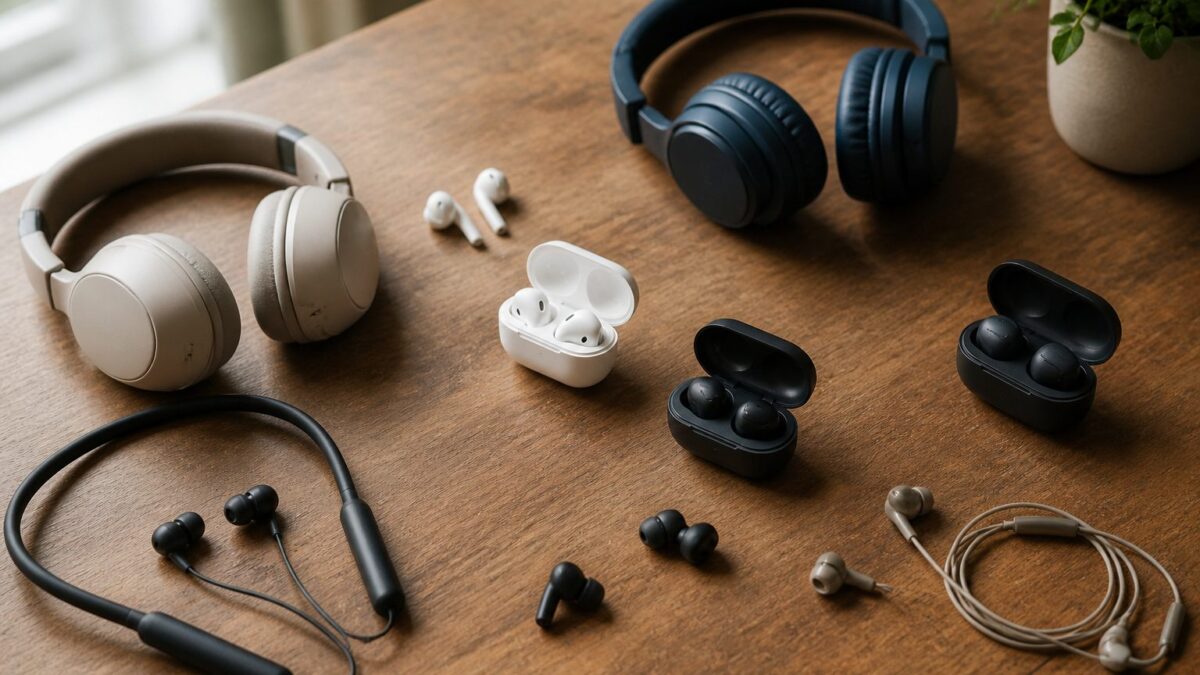
Earphones (or earbuds) fall into several main categories, each suited to different uses and preferences. The main types are:
- In-ear monitors (IEMs): Small buds that fit snugly inside your ear canal. Good for isolation and portable use.
- Earbuds: Rest in the outer ear but don’t enter the ear canal. Usually less isolating, but can be more comfortable for some.
- Wireless/Bluetooth earphones: No cables, connect via Bluetooth. Includes true wireless (separate buds) and neckband styles.
- Wired earphones: Connect by cable for consistent audio quality and no battery concerns.
- Sports/fitness earphones: Designed to stay in place during movement, often sweat-resistant.
Each type has pros and cons. For example, IEMs offer good sound isolation, but some people find them uncomfortable for long periods. Wireless earphones are convenient but depend on battery life and may have connection issues.
Key factors to consider before buying
Before committing to a pair of earphones, it’s important to clarify your specific needs and preferences. Consider your main listening environments: are you mostly at home where comfort and sound quality matter most, or do you need something portable and durable for commuting in cities like Paris or Mumbai? For those who exercise frequently, a sweat-resistant and secure-fitting model is essential, especially in humid climates or for high-intensity workouts.
- Usage scenario: Identify where and how you’ll use your earphones most often. This helps you prioritize features like portability, durability, or sound isolation.
- Wired vs. wireless: Wired earphones are reliable and don’t require charging, but may be less convenient if your device lacks a headphone jack (as is common with newer iPhones and some Android phones). Wireless models offer freedom of movement but require regular charging and may introduce audio latency.
- Sound vs. comfort: Some audiophile models prioritize sound quality but may be heavier or less comfortable for long listening sessions. Decide which aspect is more important for your routine.
- Extra features: Think about whether you need a built-in microphone for calls, active noise cancellation for travel, or water resistance for outdoor activities. Some models also offer app-based customization or touch controls.
- Budget: Set a realistic spending range. Entry-level models can start around $20–$40 USD, while premium options can exceed $200. Think about the value each feature adds to your daily use.
Narrowing down your requirements helps you avoid paying for unnecessary features or ending up with earphones that don’t suit your lifestyle. Take the time to list your must-haves versus nice-to-haves before making a purchase.
Sound quality: what to look for
Sound quality varies widely between models and price points. Here’s what to check:
- Frequency response: A wider range (e.g., 20Hz–20kHz) can mean better detail, but tuning matters more than numbers.
- Bass, mids, treble: Some earphones boost bass for impact, others focus on balanced or clear vocals. Personal preference is key.
- Distortion: Lower distortion means cleaner sound, especially at high volumes.
- Driver type: Dynamic drivers are common and versatile. Balanced armature drivers are often used in high-end IEMs for detail.
If possible, listen before you buy. Many shops let you try demo units. Otherwise, read detailed reviews focusing on the type of music you enjoy.
Fit and comfort for long-term use
Comfort is highly individual and crucial for earphones, especially if you plan to wear them for hours at a time. Poor fit can cause discomfort, ear fatigue, or even pain, regardless of sound quality. Most in-ear monitors (IEMs) and earbuds come with multiple ear tip sizes—usually small, medium, and large. Take the time to try each size to find a snug seal that doesn’t cause pressure or slip out during movement. A good seal not only improves comfort but also enhances bass response and noise isolation.
- Ear tip size: Experiment with all included tips. Some brands, like those popular in the US and UK, offer memory foam tips for better isolation, while others use silicone for easy cleaning and durability.
- Weight: Lightweight models (often under 10 grams per earbud) are generally more comfortable for extended wear. Heavier designs may cause fatigue or fall out more easily.
- Stability: For sports or active use, look for earphones with ear hooks, fins, or winged tips. These designs help keep the earphones secure during running, cycling, or gym workouts, which is especially important in countries with active outdoor lifestyles like Australia or Canada.
- Material: Silicone tips are soft and easy to clean, making them suitable for everyday use. Foam tips provide superior noise isolation but may degrade faster and need replacement every few months, depending on humidity and usage.
Wearers of glasses or those with unusually large or small ears should seek out models with adjustable or ergonomic designs. Some brands offer custom-fit earphones or third-party tips for a more tailored experience. Since comfort is subjective and can vary widely, it’s best to try earphones before buying, or purchase from retailers with a good return policy. Prioritizing fit and comfort ensures you’ll enjoy using your earphones for long sessions without discomfort.
Wired vs wireless: pros, cons, and use cases
The choice between wired and wireless earphones depends largely on your lifestyle, devices, and listening habits. Each type has distinct advantages and disadvantages, which can affect both convenience and sound quality.
- Wired: These earphones require no charging and often deliver consistent audio quality with minimal lag. They tend to be more affordable, with good models available from $15 to $100 USD. However, they can be less convenient if your phone or laptop lacks a headphone jack—a common issue with newer models from Apple and Samsung. Wired earphones are often favored by audiophiles, musicians, or anyone needing zero-latency audio, such as during gaming or video editing.
- Wireless: Wireless earphones offer greater freedom of movement and are ideal for workouts, commuting, or multitasking at home. True wireless earbuds (like Apple AirPods or Samsung Galaxy Buds) are completely cable-free, while neckband styles connect the buds with a flexible band. Battery life varies: most true wireless models offer 4–10 hours per charge, with charging cases providing additional recharges; neckbands can last 10–20 hours on a single charge. Downsides include the need for regular charging, potential connection dropouts, and sometimes higher prices (ranging from $30 to $300 USD, depending on features).
Some wireless models (especially in the mid- to high-end range) include a detachable cable, so you can use them wired if the battery runs out. Consider your daily routine: if you travel often or use multiple devices, features like Bluetooth multipoint or a compact charging case can be valuable. Be aware of common pitfalls, such as poor battery life, uncomfortable fit, or unreliable Bluetooth connections—especially with budget brands. Always check compatibility with your devices before purchasing.
Special features: noise cancellation, water resistance and more
Features can add convenience but also cost. Here are common extras:
- Active noise cancellation (ANC): Reduces background noise, useful for travel or commuting. Adds cost and uses more battery.
- Water/sweat resistance: Rated by IPX codes (e.g., IPX4, IPX7). Essential for sports or rainy climates.
- Microphone and controls: Inline mics and buttons let you take calls or skip tracks. Some support voice assistants.
- App support: Customise sound with EQ, update firmware, or find lost buds via the manufacturer’s app.
- Multipoint pairing: Connect to two devices at once (e.g., phone and laptop).
Decide which features you’ll use daily. For example, ANC is valuable for flights, but less crucial for gym use.
Durability and build quality
Since earphones are often subject to daily wear and tear—being tossed into bags, exposed to sweat, or tugged during commutes—durability is a key consideration. Start by examining the cable if you’re buying a wired model. Braided or reinforced cables are much less likely to tangle or fray compared to thin, rubber-coated ones. Some premium brands offer detachable cables, which can be replaced if damaged, extending the lifespan of your earphones. For example, several Japanese and German brands are known for their robust, user-replaceable cables.
- Cable quality: Look for thick, flexible cables, ideally with strain relief at the connectors. Detachable cables are a plus for repairs.
- Connector type: Make sure the plug matches your devices—3.5mm jacks are still common, but many phones now use USB-C (Android) or Lightning (Apple). Bluetooth compatibility is essential for wireless models; check the supported version for better range and stability.
- Case: A sturdy carrying case protects your earphones from physical damage and dust. Hard-shell cases are especially useful for travelers or students who carry their earphones in backpacks.
- Warranty: Look for at least a 1-year warranty. Some brands, especially in Europe and North America, offer more comprehensive coverage, including accidental damage or free repairs. Always check the warranty terms for your country, as coverage can differ significantly.
For those in humid climates or who use earphones during workouts, check the water resistance rating (IPX). An IPX4 rating means splash resistance, while IPX7 can withstand immersion. In countries like India, Singapore, or Brazil, sweat resistance is particularly important due to high humidity. Investing in durable, well-built earphones helps ensure longevity and protects your purchase from everyday mishaps.
Price ranges and what to expect
Earphones range from budget models under $20 (GBP 16/EUR 18/INR 1,500) to high-end audiophile products over $500 (GBP 400/EUR 470/INR 40,000). Here’s what you typically get at each level:
- Budget ($10–$40): Basic sound, limited features, mostly wired. Good for casual use or kids.
- Mid-range ($40–$150): Better sound, comfort, and features like basic water resistance or wireless. Good for daily use.
- Premium ($150–$500+): Advanced drivers, ANC, app support, luxury build. For enthusiasts or frequent travellers.
Prices vary by country: in India, local brands may offer good value under INR 2,000; in the UK and EU, VAT can affect prices. Don’t assume higher cost always means better sound—try or research before you buy.
How to shop: testing, reviews, and returns
- Make a shortlist based on your needs (type, features, budget).
- Read recent reviews from sources that test sound, comfort, and durability.
- Visit a store to try demo models if possible; bring your own music.
- Check the return policy, especially for in-ear products (some countries restrict returns for hygiene reasons).
- Compare warranty terms and local customer support.
Online stores often have better prices, but in-person testing is invaluable for comfort and fit. If buying online, choose reputable sellers and keep packaging until you’re sure you’ll keep the earphones.
| Feature/Factor | Entry-level ($10–$40) | Mid-range ($40–$150) | Premium ($150+) |
|---|---|---|---|
| Sound quality | Basic, can distort at high volume | Clearer, better balance | Detailed, customisable |
| Comfort & fit | Limited tips, basic design | Multiple tips, ergonomic | Custom-fit, premium materials |
| Connectivity | Mostly wired, basic Bluetooth | Wired/wireless, stable Bluetooth | Multipoint, advanced codecs |
| Battery life (wireless) | 3–5 hours | 5–10 hours, charging case | 8–12 hours, fast charge |
| Noise cancellation | No | Passive or basic ANC | Advanced ANC |
| Water/sweat resistance | Rare | Common (IPX4+) | Standard (IPX7+) |
| Warranty | 3–12 months | 12–24 months | 2+ years |
Bottom line
Choosing the right earphones involves more than just picking a popular brand or the most expensive model. Start by identifying your primary use case: are you mainly listening to music on your daily commute, needing something sweat-resistant for workouts, seeking noise isolation for air travel, or just relaxing at home? Each scenario may require a different set of features. For example, commuters in cities like Tokyo or London might prioritize active noise cancellation to block out train noise, while runners in Sydney or New York often need a secure fit and water resistance.
Before purchasing, visit a local electronics store if possible to physically try on different models. This hands-on approach lets you assess comfort and fit, which can be hard to judge online. If in-person testing isn’t possible, rely on recent, detailed reviews from trusted sources and look for feedback from users with similar needs. Avoid assuming that a higher price always equals better quality; some mid-range models outperform expensive ones in real-world use, especially in terms of comfort or battery life.
Remember, features like Bluetooth multipoint (for connecting to two devices at once), customizable sound profiles, or replaceable parts can make a big difference in daily use. Don’t overlook after-sales support and warranty terms, which can vary widely between brands and countries. Investing time in research and self-assessment before buying can help you avoid common pitfalls such as poor fit, inadequate battery life, or paying extra for features you’ll never use, ultimately saving you both money and frustration.
Frequently asked questions
1. Are wireless earphones as good as wired for sound quality?
Wired earphones generally offer more consistent audio quality, especially at lower prices. However, mid-range and premium wireless models can sound excellent, thanks to better Bluetooth codecs and drivers. For critical listening, wired is still preferred by many, but wireless is more convenient for daily use.
2. How do I know if earphones will fit my ears?
Look for models that include multiple sizes of ear tips, and try each to find a secure, comfortable seal. Some brands offer fit guides or 3D scans in their apps. If you have small or large ears, check user reviews for feedback on fit. Trying before you buy is the best way to ensure comfort.
3. Do I need noise-cancelling earphones?
Noise-cancelling (ANC) earphones are helpful in noisy environments like planes or public transport. For office or home use, passive isolation may be enough. ANC adds cost and uses more battery, so consider if you’ll benefit from this feature before paying extra.
4. Can I use any earphones with my phone or laptop?
Most devices support Bluetooth earphones, but check for compatibility with codecs (e.g., aptX, AAC) for best quality. Wired earphones may need adapters if your device lacks a headphone jack (e.g., Lightning for iPhones, USB-C for some Androids and laptops). Always check your device’s supported connections.
5. How long do earphones typically last?
With regular use, budget earphones may last 6–18 months, while mid-range and premium models can last several years if cared for. Factors include build quality, how you store them, and whether they’re exposed to sweat or rain. Keeping them in a case and cleaning tips regularly extends their lifespan.
Note: This is general information. Prices, features, and warranty terms vary by country and brand. Always check current specifications and local regulations, and for high-cost purchases or hearing concerns, consider advice from a qualified professional.