How to Pack Light for Long Trips
Packing light for long trips means choosing versatile clothing, smart luggage, and essential gear, so you travel comfortably without excess weight.
Packing light for long trips is possible—and rewarding. With the right strategies, you can avoid heavy bags, extra fees, and the hassle of lugging excess gear. The key is to focus on essentials, choose versatile items, and organise efficiently.
This guide walks you through each step: choosing luggage, selecting clothes, picking the right gear, and packing for different climates. Whether your journey lasts weeks or months, you’ll find practical ways to keep your load manageable across countries and seasons.
Why pack light for long trips?
Packing light for extended travel offers practical advantages that can make your journey smoother and less stressful. One of the most immediate benefits is cost savings: airlines around the world, from Ryanair in Europe to AirAsia in Southeast Asia, often charge substantial fees for checked or overweight baggage. These fees can quickly add up, especially if your trip involves multiple flights or train journeys. For instance, Japanese trains and many European budget rail lines have strict luggage size restrictions, and exceeding them may mean extra charges or logistical headaches.
Physically, carrying less means less strain on your back and shoulders. This is particularly important if you plan to walk long distances, use public transportation, or navigate uneven terrain, such as the cobblestone streets of Prague or the steep staircases in Lisbon. With a lighter load, you can change plans spontaneously, hop on a crowded bus in Vietnam, or easily stow your bag in a hostel locker or under your seat on a train.
Packing light also streamlines your daily routine. You’ll spend less time unpacking and repacking at each stop, and you’ll have fewer items to keep track of—reducing the risk of leaving belongings behind in hotels or on transport. Flexibility becomes your ally: if you find a last-minute deal on a flight or need to switch accommodations quickly, you can do so without the burden of heavy luggage. Overall, packing light enhances your mobility and peace of mind, wherever your travels take you.
Choosing the right luggage
Your main bag sets the tone for your entire trip. For most long journeys, a carry-on sized suitcase (around 40L) or a travel backpack (40–50L) is ideal. These fit overhead compartments on most airlines (though size rules vary: US domestic flights often allow slightly larger bags than European or Asian carriers).
- Wheeled suitcase: Best for urban trips with paved streets.
- Travel backpack: More flexible for mixed terrain, stairs, or rural areas.
Look for bags with sturdy zippers, lockable compartments, and internal organisation. Some travellers use packing cubes or compression bags for extra order, which can help you fit more in and keep clean and dirty clothes separate.
Clothing: What and how much to pack
Bring clothing that can be layered, mixed, and matched. The goal is to create multiple outfits from a small number of pieces. Here’s a general rule for trips longer than two weeks:
- 3–4 tops
- 2 bottoms (pants/shorts/skirts)
- 1 dress or extra bottom/top (optional)
- 1–2 outer layers (jumper, light jacket, or fleece)
- 5–7 pairs of underwear and socks
- 1 set of sleepwear
- 1 swimsuit (if relevant)
- 1 pair of comfortable walking shoes
- 1 pair of sandals or flip-flops
Choose clothes made from quick-drying, wrinkle-resistant fabrics. Merino wool and technical synthetics are popular for their odour resistance and versatility. In tropical climates, light cotton or linen works well, but may dry slower.
Toiletries and personal care items
When packing toiletries for a long journey, aim for a minimalist approach—bring only what you’ll need for the first few days, as most supplies can be replenished locally. Use travel-sized containers (under 100ml or 3.4oz for liquids if you’re flying, in compliance with international airport security rules). This not only helps you stay within carry-on limits but also reduces weight and clutter in your bag.
- Dental care: Toothbrush, a small tube of toothpaste, and floss. In many countries, dental kits are available in convenience stores and pharmacies, but if you prefer a specific brand or have sensitive teeth, pack accordingly.
- Hair and body: Travel-sized shampoo and body wash, or consider a solid shampoo bar to save space and avoid liquid restrictions. A compact hairbrush or comb is usually sufficient.
- Hygiene: Deodorant and a razor. Disposable razors are widely sold, but if you use an electric razor or specific brand, bring it with you.
- Laundry: A small bottle of concentrated laundry detergent or a few detergent sheets allows you to wash clothes in the sink, useful in regions where laundromats are scarce or expensive (e.g. rural Japan or remote areas in South America).
- Medications: Bring enough prescription medication for your trip, plus copies of your prescriptions in case you need to replace them. Some countries (like Thailand or the UAE) have strict rules on certain drugs, so research entry requirements in advance.
- Protection: Sunscreen and insect repellent are essential in tropical or high-altitude regions. In places like Australia or Southeast Asia, these products can be costly or hard to find in rural areas, so consider packing a small supply if your itinerary includes such locations.
Basic toiletries such as soap, shampoo, and toothpaste are widely available and affordable in most parts of the world, including supermarkets in Europe, corner shops in India, and 24-hour convenience stores in Japan. However, if you have sensitive skin, allergies, or require specific brands, it’s wise to bring what you need, as alternatives may not be readily available or may be more expensive abroad. Consider solid alternatives (bar soap, shampoo bars) to further minimise space and avoid liquid restrictions. Always check destination-specific regulations for items like prescription drugs or aerosol sprays to avoid confiscation at borders.
Electronics and travel documents
Efficient packing for electronics means prioritising devices you’ll use daily and leaving non-essentials at home. For most travellers, a smartphone is indispensable—it serves as your camera, navigation tool, and communication device. If you plan to use data or make calls, research options for international SIM cards or eSIMs before departure; for example, in the EU, roaming charges are often capped, but in countries like Japan or the US, prepaid SIMs or portable WiFi devices may be more cost-effective.
- Chargers and adapters: Bring a single charger for each device and invest in a reliable universal plug adapter. Electrical outlets vary widely: the UK uses Type G, most of Europe uses Type C or F, while Australia and China use Type I. Universal adapters help avoid the need for multiple country-specific plugs.
- Power bank: A portable battery can be a lifesaver on long travel days or in countries where power outages are common (e.g. parts of India or rural Africa). Airlines usually allow power banks under 100Wh in carry-on luggage.
- Audio: Earphones or lightweight headphones are useful for entertainment and calls. Noise-cancelling options can be a bonus on long flights or train rides.
- Laptop or tablet (optional): If you’re working or studying remotely, choose a lightweight device. For example, many digital nomads favour ultrabooks (under 1.5kg) or tablets with detachable keyboards.
Keep all travel documents—passport, visas, travel insurance, and emergency contacts—in a single, easily accessible pouch. Make photocopies or digital scans and store them securely online (e.g. cloud storage or encrypted email) in case of loss or theft. In some countries, such as India or the UAE, you must carry your passport at all times and may be asked for it by authorities. In contrast, in much of the EU, the UK, and the US, digital copies are often accepted for identification in hotels or when booking transport, but you’ll need the original for border crossings. Always check the specific requirements for your destinations and keep backup copies separate from the originals to avoid being stranded if your bag is lost or stolen.
Packing for different climates and regions
Long trips often span multiple climates. Pack for the coldest and/or wettest weather you expect, and layer for warmth:
- Warm climates: Focus on lightweight, breathable clothing. A wide-brimmed hat and a light scarf help with sun protection.
- Cold climates: Include a packable insulated jacket, thermal base layers, gloves, and a hat. Layering is key—avoid bulky items.
- Rainy seasons: A compact umbrella or a lightweight rain jacket is often more useful than a heavy coat.
Plan to do laundry every 4–7 days. In Europe, laundromats are common; in India or Southeast Asia, laundry services are affordable and widely available.
Essential extras and multipurpose items
Bringing a few well-chosen multipurpose items can help you pack lighter while staying prepared for a range of situations. These extras are designed to serve multiple functions, reducing the number of single-use items in your luggage.
- Sarong or large scarf: This is one of the most versatile travel items. Use it as a towel at the beach in Thailand, a blanket on chilly buses in South America, a makeshift curtain in hostel dorms, or a cover-up when visiting religious sites in Turkey or Morocco where modest dress is required.
- Reusable water bottle: Staying hydrated is essential, and many airports, train stations, and public spaces worldwide now have refill stations. In countries with safe tap water (e.g. Germany, Canada, New Zealand), you can refill as you go. In places where water quality is a concern, consider a bottle with a built-in filter.
- Padlock: A small, sturdy padlock is useful for securing hostel lockers or your bag’s zippers on overnight trains, such as those in India or China. Some hostels require you to bring your own lock.
- Foldable tote bag: This lightweight bag takes up little space but is invaluable for grocery shopping in countries with plastic bag bans (e.g. Rwanda, parts of the EU), beach trips, or carrying extra items on day excursions.
- Small first-aid kit: Include plasters (band-aids), painkillers, antiseptic wipes, and any personal medication. Pharmacies are common in urban areas worldwide, but access can be limited in remote regions or during national holidays.
Optional extras like a travel laundry line and sink stopper are helpful if you plan to hand-wash clothes, especially in areas where laundromats are rare or expensive. Solid toiletries (such as bar soap and shampoo bars) are compact, leak-proof, and avoid liquid restrictions at airports. When choosing extras, consider your specific itinerary and the likelihood of needing each item. Avoid overpacking by focusing on gear that truly adds value and flexibility to your trip.
Packing techniques and organisation
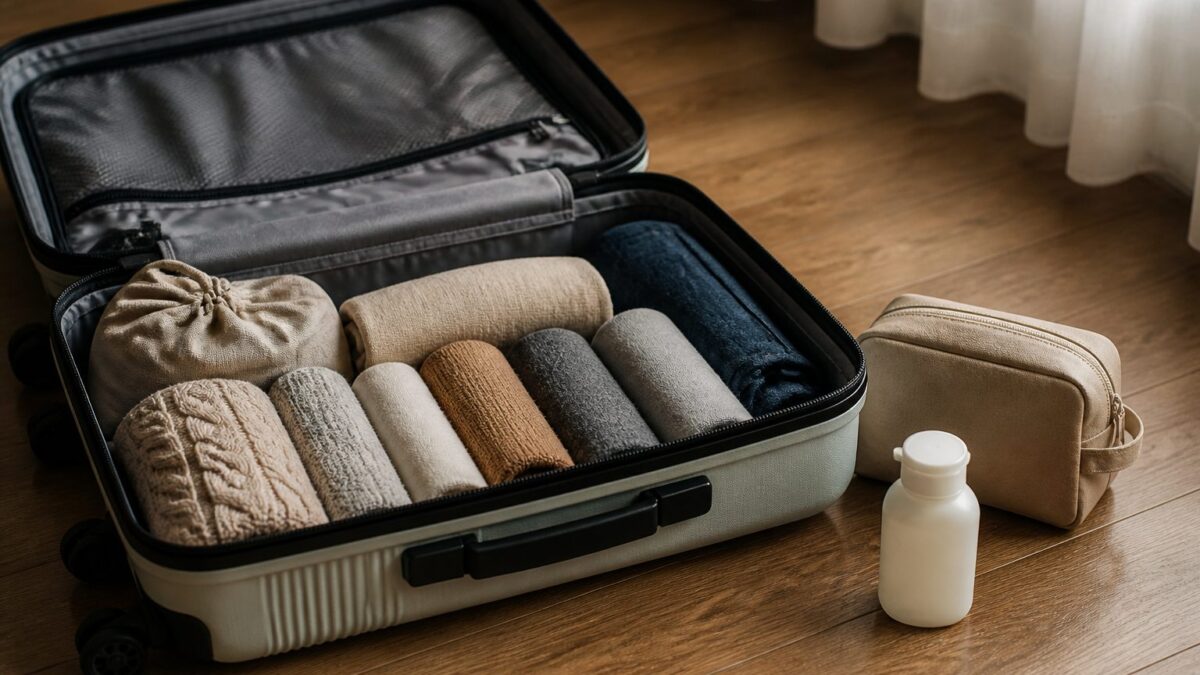
- Roll, don’t fold: Rolling clothes saves space and reduces wrinkles.
- Use packing cubes: These help keep items sorted by type or activity.
- Fill shoes with small items: Socks or chargers can go inside shoes to use every bit of space.
- Keep liquids accessible: Place liquids at the top of your bag for easy removal during airport security checks.
- Weigh your bag: Check airline limits (typically 7–10kg for carry-on; 15–23kg for checked bags, but varies by country and airline).
If you’re carrying a daypack, keep valuables and essentials there, especially during transit.
Sample packing list and costs
| Item | Typical quantity | Estimated cost range (USD/GBP/EUR/INR) | Tips |
|---|---|---|---|
| Main bag (40–50L) | 1 | $50–$200 (£40–£160/€45–€180/₹4,000–₹15,000) | Look for lightweight, durable models |
| Packing cubes | 3–5 | $10–$30 (£8–£24/€9–€28/₹800–₹2,400) | Optional but useful for organisation |
| Versatile tops | 3–4 | $30–$120 total (£25–£100/€27–€110/₹2,500–₹10,000) | Choose neutral colours for mixing |
| Pants/shorts/skirts | 2 | $40–$100 (£32–£80/€36–€90/₹3,000–₹8,000) | Quick-dry fabrics work best |
| Walking shoes | 1 pair | $50–$150 (£40–£120/€45–€135/₹4,000–₹12,000) | Break in before your trip |
| Toiletry kit | 1 | $10–$30 (£8–£24/€9–€28/₹800–₹2,400) | Refill as you go |
| Universal adapter | 1 | $10–$25 (£8–£20/€9–€23/₹800–₹2,000) | Essential for multi-country trips |
| Daypack | 1 | $20–$70 (£16–£56/€18–€65/₹1,600–₹5,600) | Lightweight, packs flat |
| Reusable water bottle | 1 | $10–$30 (£8–£24/€9–€28/₹800–₹2,400) | Check for local tap water safety |
Bottom line
Packing light for a long trip requires forethought and discipline, but the advantages are significant and practical. Travellers who pack minimally generally experience greater freedom of movement, whether navigating airports, train stations, or narrow alleyways in old city centres. By limiting yourself to a carry-on or small backpack, you avoid checked baggage fees, which can range from $20 to $100 per flight on many airlines in North America and Europe, and sometimes even higher on budget carriers in Asia or Australia. You also spend less time waiting at baggage carousels, and you reduce the risk of lost or delayed luggage—an inconvenience that can disrupt your trip for days.
To pack light effectively, focus on selecting versatile clothing that can be layered and mixed for different climates and occasions. Prioritise essential gear such as a universal adapter, compact toiletries, and a reusable water bottle. Organisation is key: packing cubes or compression bags help maximise space and keep items accessible. Tailor your packing list to your specific destinations and activities. For example, if travelling in Southeast Asia during the rainy season, include a lightweight rain jacket and quick-drying clothes; if visiting Scandinavia in winter, prioritise thermal layers and a compact down jacket.
Remember, most destinations have stores and markets where you can purchase forgotten or replacement items, often at reasonable prices. Pharmacies, supermarkets, and convenience stores are ubiquitous in most urban centres worldwide. Don’t overpack for unlikely scenarios—focus on what you’ll truly need. Travelling light doesn’t mean going without, but rather travelling smarter and adapting as you go.
Frequently asked questions
How do I do laundry while travelling long-term?
Most urban areas worldwide offer laundromats, laundry services, or hostel facilities. In rural or remote areas, hand-washing in sinks or tubs is common. Bring a small bottle of laundry detergent and a travel laundry line for drying.
What should I do if my bag exceeds airline weight limits?
Repack before your flight: wear heavier items (jackets, shoes) and move small valuables to your personal item or daypack. Some airlines are stricter than others; weigh your bag at home or at the airport to avoid fees.
How can I pack for both hot and cold climates on the same trip?
Layering is the best strategy. Pack lightweight base layers, a warm mid-layer (like a fleece), and a compact, packable jacket. Remove or add layers as needed. Avoid bringing bulky items that take up space.
Are packing cubes worth it for long trips?
Packing cubes help with organisation and can compress clothing, making it easier to fit everything in your bag. They’re not essential, but many travellers find them helpful, especially for longer journeys.
What items are easiest to buy abroad if I forget something?
Basic toiletries, clothing, and even phone chargers are widely available in most countries. Specialty items (like prescription medicines or technical outdoor gear) can be harder to replace, so pack those carefully.
Note: This is general information. Prices and airline rules vary by country and provider. Always check current baggage terms, and for travel or insurance matters, consider advice from a qualified professional.